Jardim Botânico da Madeira
Built on the former Quinta do Bom Sucesso at 300 meters elevation, showcasing endemic Macaronesian pride of Madeira (Echium candicans) spikes in late April alongside geometric bedding parterres.
Portugal · Atlantic Volcanic Terraces
Held after Easter each spring along the sunlit amphitheater of Funchal, Madeira's Festa da Flor draws simultaneously from coastal banana-terrace warmth and mist-cooled mountain farms high above the bay.
Madeira sits in the path of moist northeast Atlantic trade winds roughly 540 kilometers off the Moroccan coast. When warm ocean air hits the island's volcanic spine rising to 1,862 meters at Pico Ruivo, clouds condense into steady afternoon mist along the northern and central slopes while keeping Funchal's south-facing basin mild around 19°C to 22°C throughout April and May.
That compressed vertical relief lets florists harvest contrasting botanical families on the same island. Below 250 meters around Câmara de Lobos and Caniço, warm volcanic loam yields structural Strelitzia reginae (bird-of-paradise), hibiscus, and flame-colored Aloe arborescens. Higher up along levada stone channels in Santo da Serra and Santana, cool damp air produces camellias, tree ferns, giant Protea cynaroides, and hydrangeas.
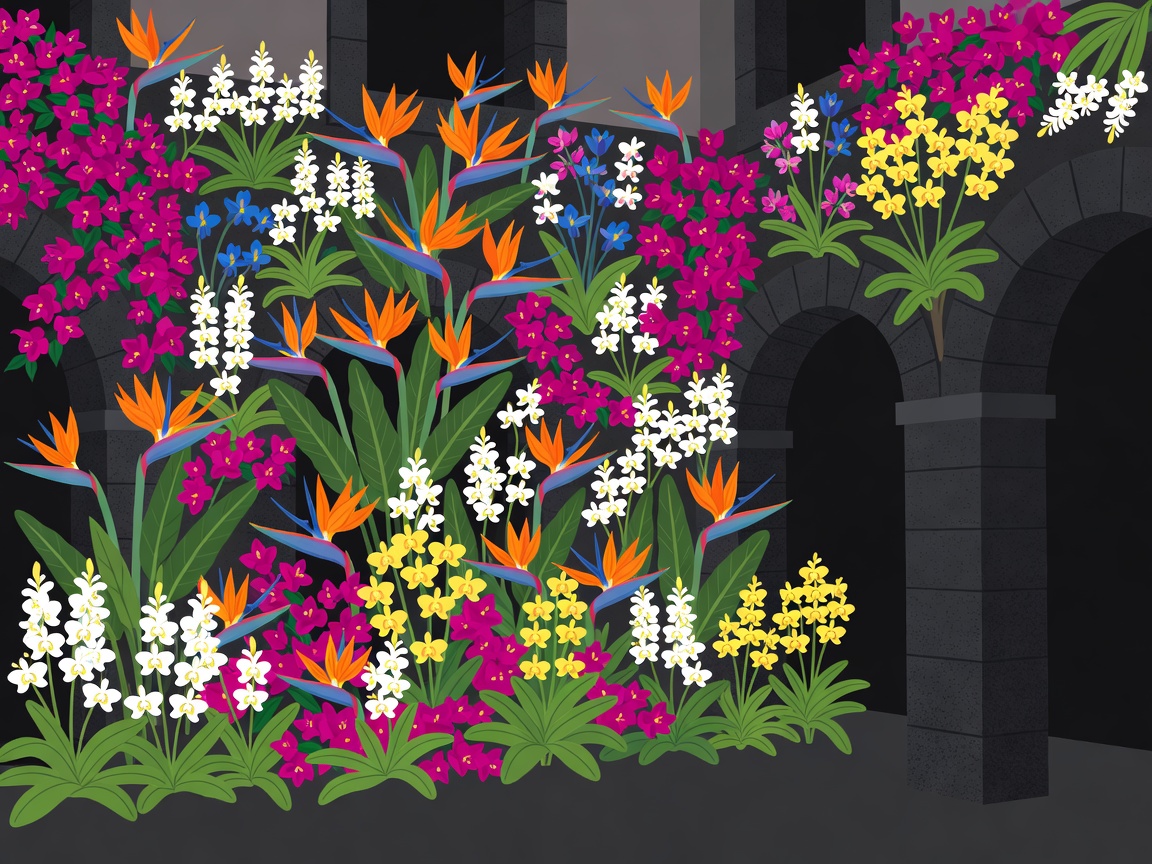
Funchal's central promenade, Avenida Arriaga, becomes an open-air studio during the festival. Teams of local floral artisans trace geometric patterns onto black basalt cobblestones and pack thousands of plucked petals, pine needles, hydrangea florets, and marigold heads into crisp mosaic bands. Walking the avenue at 07:15—before sun reaches high overhead and before cruise-port shuttles fill Largo da Restauração—shows the carpets freshly misted and sharp at the edges.
On the first Saturday morning of the festival, children gather at Praça do Município to place single stems onto the upright wooden lattice known as the Muro da Esperança (Wall of Hope), a tradition maintained since 1979. Sunday afternoon brings the Allegoric Parade along Avenida do Mar, though the quietest botanical encounters happen early in the surrounding hillside gardens.
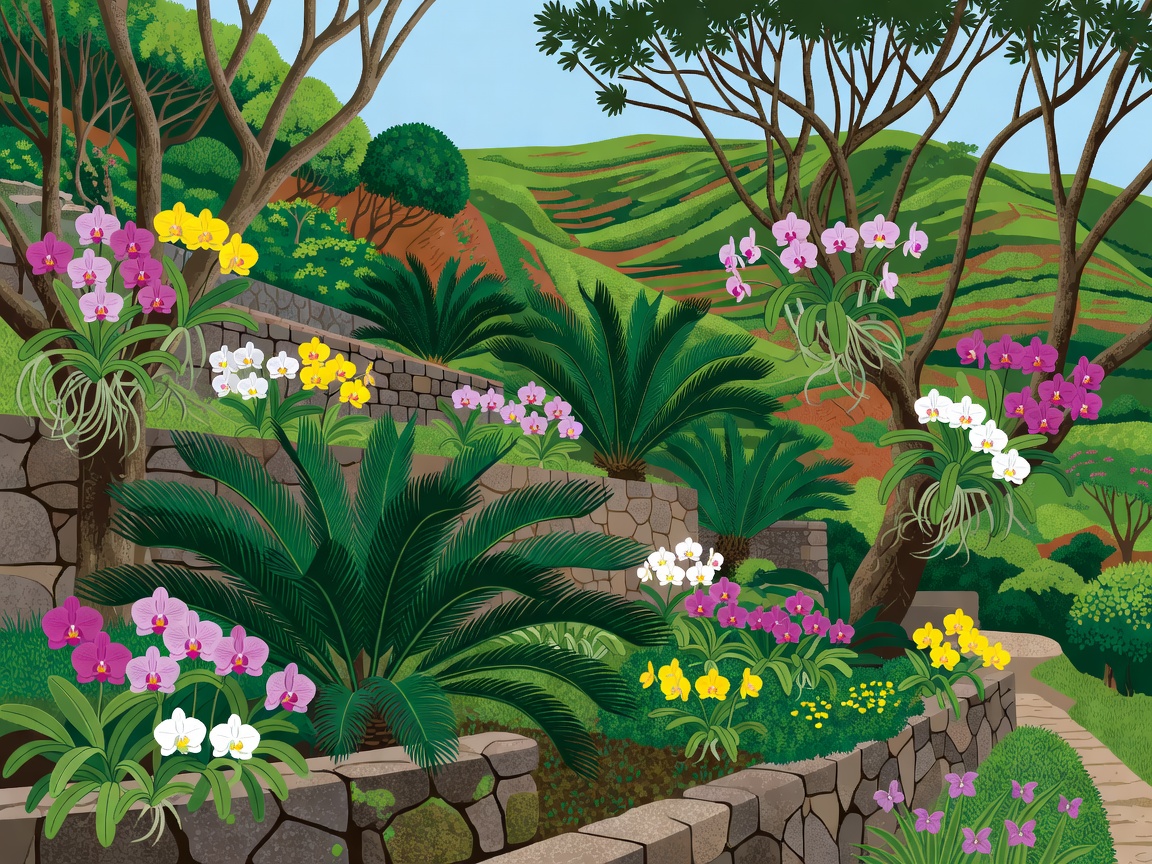
Beyond the harbor promenades, three permanent gardens demonstrate why Madeira blooms almost without interruption across spring. Take the morning bus or cable car up to Monte before 09:30, when valley fog still softens the Atlantic glare, and descend on foot through terraced paths toward city level.
Built on the former Quinta do Bom Sucesso at 300 meters elevation, showcasing endemic Macaronesian pride of Madeira (Echium candicans) spikes in late April alongside geometric bedding parterres.
Shaded ravine paths at 550 meters holding South African proteas, Japanese camellias, and over sixty cycad species fed by natural mountain spring runnels.
Often called Blandy's Gardens, high on the eastern ridge at 500 meters, noted for hundred-year-old camellia avenues and scented spring freesia borders.
Your privacy choices We use necessary cookies to run the site and, with your consent, optional ones to measure visits. You can change this at any time. Read more