Hortus Bulborum, Limmen
A living heritage collection north of Haarlem preserving over 4,000 historic bulb cultivars, including seventeenth-century Duc van Tol tulips and heirloom hyacinths.
Netherlands · Bollenstreek & North Holland
Keukenhof's 32 hectares and the surrounding commercial bulb ridges run on two distinct calendars: landscaped park beds engineered for eight continuous weeks, and working farms topped within days of opening.
The historic bulb belt between Haarlem and Leiden sits atop leveled coastal sand dunes rather than heavy river clay. Because coarse silica drains winter meltwater swiftly and holds air pockets, sunlight warms the top 10 centimeters faster than inland pastures. Once soil temperatures settle above 7°C in March, crocuses and early daffodils lift first; hyacinths release scent across Voorhout and Sassenheim around 8.5°C, and main-crop Darwin Hybrid and Triumph tulips open once soil holds 9°C to 11°C.
Winter chill remains equally decisive. Tulips planted in October and November need roughly 12 to 15 weeks below 9°C to complete internal stalk elongation. After mild Atlantic winters with few frost nights, stems often emerge shorter than normal, keeping blossoms low inside the leaves until warm April afternoons pull them upright.
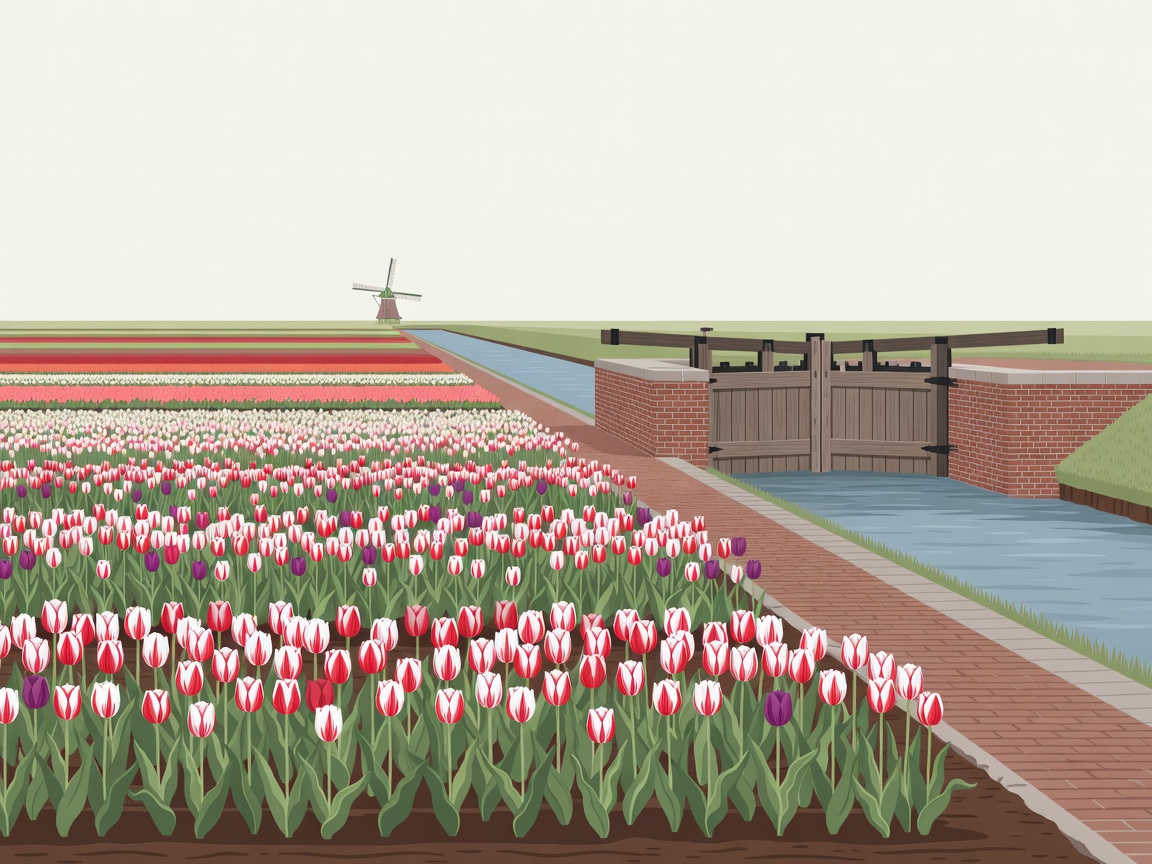
While commercial growers plant single cultivars in uniform blocks, Keukenhof's gardeners bury three depth tiers inside the same border: late-blooming Darwin tulips deepest at 20 cm, mid-season tulips or hyacinths in the middle, and early crocuses or muscari near the surface. This staggered architecture stretches continuous color from late March through early May regardless of whether Easter arrives early or late.
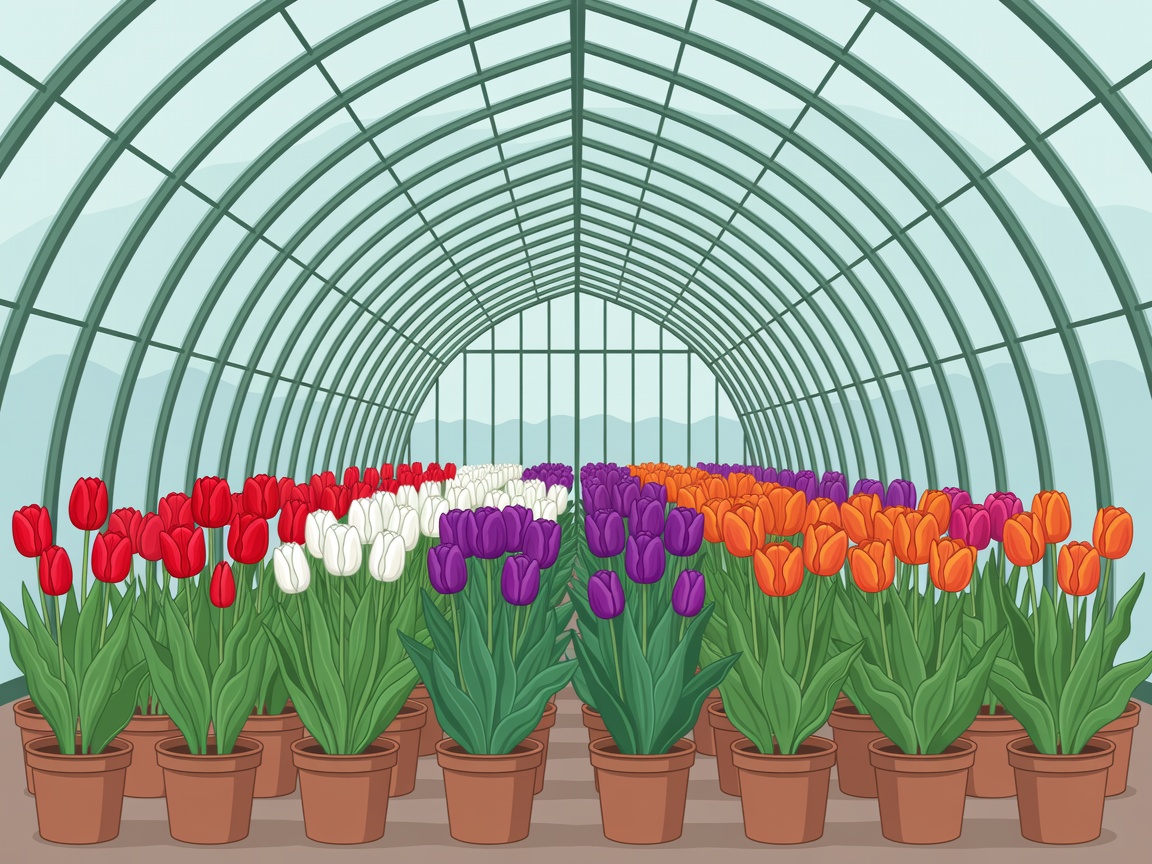
When North Sea gusts or cold hail pass over South Holland, the park's glass pavilions preserve crisp specimen displays. The Willem-Alexander Pavilion houses more than 600 forced tulip varieties on raised benches, the Beatrix Pavilion focuses on tropical orchids and anthuriums, and the Oranje Nassau Pavilion rotates cut-flower arrangements every seven days from Dutch auctions at Royal FloraHolland in Aalsmeer.
Keukenhof gates open at 08:00, and coach groups from Schiphol and Amsterdam Centraal begin filling the main avenues by 10:15. Securing the 08:00 timed entry slot grants roughly ninety minutes of unobstructed sightlines along the winding stream and under mature beech canopies before tripod traffic crowds the bridges.
To photograph working production fields without trampling private soil, start even earlier by bicycle from Leiden Centraal or Voorhout station at 06:30. Stay strictly on public asphalt lanes such as Loosterweg Noord, Oude Herenweg, and Zandsloot; stepping between bulb rows introduces fungal spores such as Botrytis tulipae ("fire") from shoe soles into sterile sand. Remember also that growers run tractor-mounted topping blades soon after peak color so nutrients flow back into underground bulbs rather than seed pods.
A living heritage collection north of Haarlem preserving over 4,000 historic bulb cultivars, including seventeenth-century Duc van Tol tulips and heirloom hyacinths.
Northeast of Amsterdam across the IJsselmeer, reclaimed clay-sand farms around Emmeloord bloom five to seven days later than Lisse, offering wide horizon lines in late April.
The annual floral float parade moves from Noordwijk to Haarlem on a Saturday in mid-April, locking regional roads between 09:00 and 21:00; cycle rather than drive.
Your privacy choices We use necessary cookies to run the site and, with your consent, optional ones to measure visits. You can change this at any time. Read more